

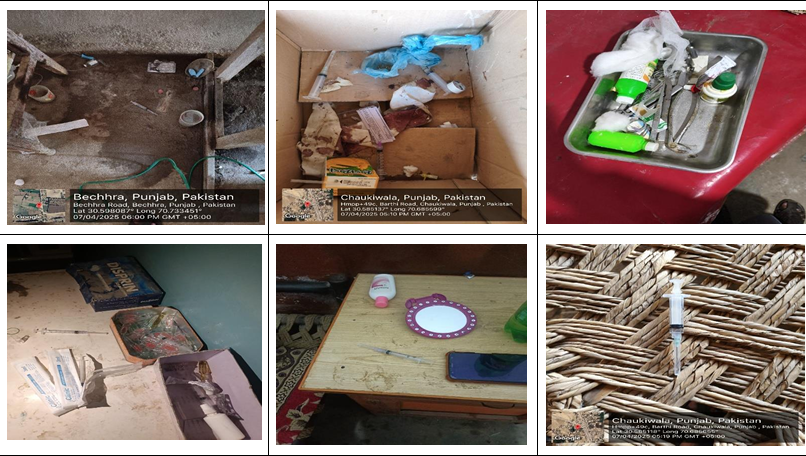
A preliminary investigation report has linked the recent surge of HIV cases in Taunsa Sharif and Dera Ghazi Khan to unsafe healthcare practices, poor infection control, and weak monitoring of public and private medical facilities.
The joint mission was conducted from April 7 to 11, 2025, at the request of the Punjab Department of Health and the Provincial AIDS Control Program to investigate the rise in HIV cases, assess the response, and identify possible sources of transmission.
106 Confirmed Cases Need Detailed Investigation
According to the report, 106 confirmed HIV cases require detailed epidemiological investigation, while one private children’s clinic in Taunsa was linked to 38 confirmed HIV-positive children.
Unsafe Practices Found in Health Facilities
The report found widespread violations of infection prevention and control standards across hospitals, basic health units, private clinics, laboratories, blood banks, and pharmacies.
These included unsafe injection practices, poor sterilization, reuse risks involving IV sets and fluids, lack of hand hygiene facilities, improper disposal of infectious waste, and weak blood transfusion documentation.
THQ Taunsa Pediatric Emergency Declared High-Risk Area
At THQ Hospital Taunsa, the pediatric emergency room was described as one of the most concerning areas.
The report noted missing pediatric medicines, used IV sets left hanging, unlabeled cannulas, blocked handwashing basins, lack of sanitizers, and unsafe injection practices. Similar gaps were observed in operation theatres, labor rooms, dental services, laboratories, wards, pharmacies, and blood banks.
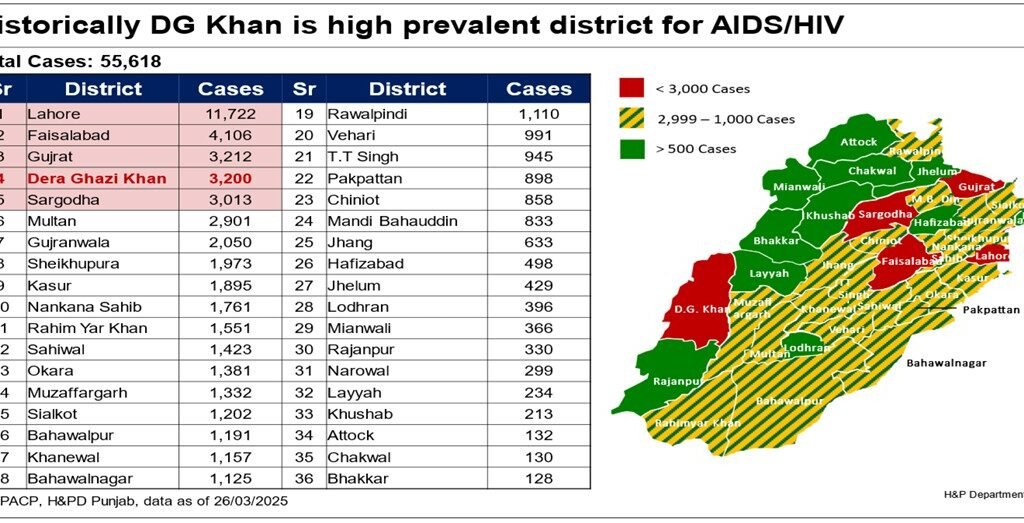
Serious Gaps Found at DG Khan Hospital and BHUs
The mission also found serious deficiencies at DHQ Hospital Dera Ghazi Khan and basic health units in Sanjar Saidan and Dona.
At DHQ Hospital, the ART Center and Blood Bank lacked basic hygiene arrangements, while blood-contaminated material was handled carelessly. At BHU Dona, sterilization practices were found questionable, with non-functional autoclaves and delivery instruments that had not been properly sterilized.
Private Clinic Linked to 38 HIV-Positive Children
Private healthcare facilities were also found to have major safety failures.
One private children’s clinic linked to 38 HIV-positive children had no infection prevention plan, no trained staff, and no routine cleaning protocols. The report also found reuse of thermometers and nebulizer masks without proper disinfection.
Families Report Shared Syringes and Medical Equipment
Families of affected children told the mission that unsafe injections and shared medical equipment were common in both public and private facilities.
The report said the findings indicate a strong possibility of healthcare-associated, or iatrogenic, transmission of HIV, particularly among children.
No Single Facility Held Solely Responsible
However, the report said no single healthcare facility could be held solely responsible for the surge.
Instead, it pointed to multiple contributing factors across public and private sectors, including unsafe medical practices, use of unqualified practitioners, shortage of trained staff and supplies, weak monitoring, poor accountability, and community preference for injections, IV fluids, and blood transfusions.
Report Calls for Urgent Reforms
The report recommended urgent enforcement of the “One Needle, One Syringe, Only One Time” rule, stronger monitoring of healthcare facilities, third-party clinical audits, mass screening campaigns in hotspot areas, mandatory HIV screening for all admitted patients, improved regulation of blood transfusion services, and action against unsafe clinics and unqualified practitioners.
It also called for HIV-specific infection control protocols, staff training, better availability of supplies, functional infection control committees, improved surveillance, public awareness campaigns, and stronger coordination among health regulators and provincial authorities.
Warning Over Preventable HIV Transmission
The mission warned that unless immediate corrective measures are taken, unsafe healthcare practices may continue to expose patients, especially children, to preventable HIV transmission.