
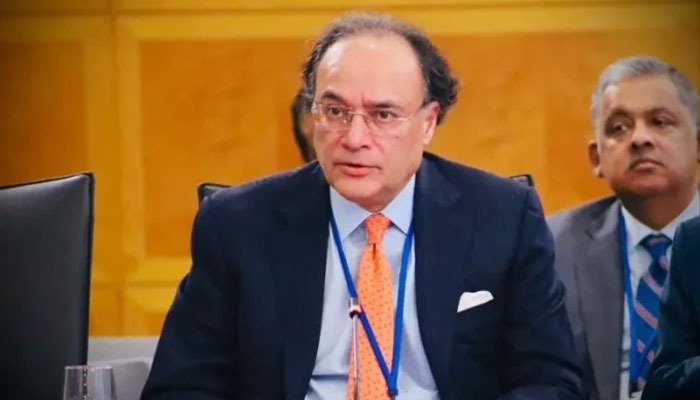
Islamabad: Finance Minister Muhammad Aurangzeb presented the National Economic Survey 2025-26, highlighting that Pakistan’s economy grew by 3.7% in the current fiscal year despite domestic and international challenges.
He stated that global economic uncertainties have affected the international economy, and while growth was expected to exceed 4%, the country maintained strong performance even amid the Middle East crisis.
Minister Aurangzeb noted that the economic survey reflects the performance of the entire fiscal year. The first months of the year faced uncertainty, compounded by monsoon rains impacting the economy. Nevertheless, he said, Pakistan’s economy demonstrated resilience, and the government successfully managed crises.
Key highlights from the survey include:
- Economic Size: Pakistan’s economy surpassed $452 billion.
- Agriculture: Growth in the sector was 2.89%, with dairy and livestock contributing 60% to agricultural output.
- Industry: Large industries recorded 6.1% growth, with 16 sectors including food and textiles showing positive trends. Cement demand rose 10%, and fertilizer demand increased 17%.
- Services Sector: Achieved growth of 4.9%.
On fiscal management, Minister Aurangzeb stated that financial discipline led to a significant reduction in the fiscal deficit, while FBR revenues rose by 10.1%. Remittances showed notable growth, exceeding $33 billion in the first 10 months of the fiscal year.
He emphasized the importance of remittances for external payments and noted that the Roshan Digital Account is aimed at encouraging investment.
Regarding trade, he mentioned that overall exports declined due to rice and sugar, but textiles remained a key export contributor. The petroleum sector grew by 5%, and sports exports—including footballs for FIFA and the World Cup—exceeded $3 billion. Freelancers’ contributions reached $1 billion.
Foreign exchange reserves exceeded $17 billion, and are expected to reach $18 billion by the end of June. The Pakistan Stock Exchange investor base rose to over 563,000, with 11 new companies listed this year and more than 39,000 new companies registered, bringing the total to over 297,000.
On credit and social support, private sector loans increased by PKR 934 billion from July to March, while PKR 2,162 billion in loans were provided to the agriculture sector. The Benazir Income Support Programme (BISP) budget for low-income families was increased to PKR 722.5 billion.
Minister Aurangzeb also stated that the government is accelerating privatization of state-owned entities including PIA, FWBL, and DISCOS, while initiating right-sizing measures, merging ministries, and closing multiple departments including PWD.
This economic survey underscores Pakistan’s resilience in the face of internal and external challenges, while showing steady growth across agriculture, industry, and services, alongside improving fiscal and investment indicators.