
Mir Raza

Mir Raza Case: Final Exhumation Report Raises Questions Over Suicide Narrative

KARACHI: A significant development has emerged in the murder case of young Karachi businessman Mir Raza, with the final examination report following his exhumation raising serious questions over the previously reported suicide narrative.

The final examination report prepared by a medical board headed by the Police Surgeon Karachi states that Mir Raza died after a bullet injury caused his heart to rupture.

According to the report, the bullet entered from the upper left side of Mir Raza’s back and travelled through his body before exiting from the front left side of his chest.

The medical board found that the bullet fractured the sixth rib and severely damaged a lung. Blood had accumulated in the chest, while two injuries were also found on the heart. The board concluded that the fatal injury caused the heart to rupture, resulting in death.

The report also found a high concentration of gunshot residue (GSR) at the bullet’s entry point on the back. GSR was also detected around the bullet holes in the shirt worn by Mir Raza.

According to the final examination report, the available evidence regarding Mir Raza’s death was not consistent with the suicide narrative. The report also documented an injury to his head and a fracture in part of his skull.

Also Read: Mir Raza Case: 9 Samples Sent to Karachi University Destroyed, Reports of 4 Received by Police

A toxicology examination detected the local anaesthetic drug bupivacaine in Mir Raza’s samples. However, no other narcotic, psychoactive or poisonous substance was detected in the tested samples.

The DNA examination also confirmed Mir Raza’s identity. According to the report, genetic samples obtained from the body matched those of his parents with 100 percent compatibility.

The final report carries the names and signatures of eight members of the medical board, including the convener, senior member, other board members, a forensic expert, a forensic identification expert and a pathologist.

Meanwhile, the high-level investigation team of Sindh Police received the final report of the second post-mortem conducted after Mir Raza’s exhumation on August 31, 2026.

Police said the report was being made public in view of public interest and the progress of the investigation. The investigation team is conducting a detailed review of the findings and will proceed further in light of the evidence contained in the forensic and medical reports.

The latest findings are expected to play an important role in determining the circumstances surrounding Mir Raza’s death and in guiding the ongoing investigation.

Jail Prison

Pakistan’s Jails Overcrowded as Under-Trial Prisoners Outnumber Capacity

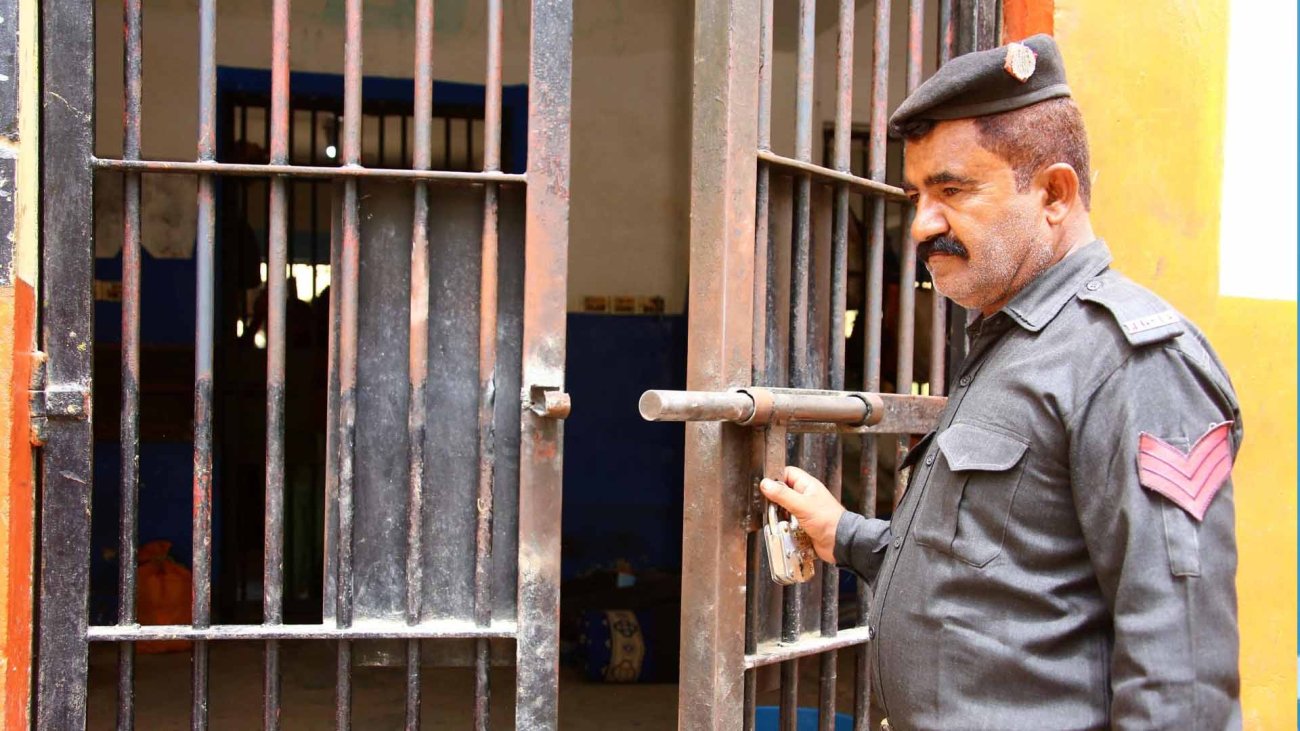
ISLAMABAD: Pakistan’s prisons are facing severe overcrowding as the growing number of under-trial prisoners continues to put pressure on the country’s already limited jail capacity, with delays in court proceedings being cited as a major factor.

According to available figures, prisons across the country have a combined capacity of around 64,000 inmates, while approximately 110,000 prisoners are currently being held in jails nationwide.

The situation is particularly critical in Punjab, where 45 prisons have the capacity to accommodate around 38,000 inmates. However, approximately 70,000 prisoners are currently incarcerated in the province, meaning the prison population is nearly twice the available capacity.

Of the 70,000 prisoners in Punjab, only around 16,000 are convicted, while the vast majority are under trial.

Sindh is also facing significant overcrowding. The province has 23 prisons with a combined capacity of around 14,000 inmates, but approximately 25,000 prisoners are currently housed in its jails.

Also Read: Sohail Afridi Warns of Sit-in at National Assembly, Threatens to Block Federal Budget

Only around 4,000 of the prisoners in Sindh are convicted, indicating that the overwhelming majority are awaiting the conclusion of their cases.

In Khyber Pakhtunkhwa, 39 prisons currently hold approximately 11,382 inmates. Of these, only around 2,000 are convicted prisoners, while the remaining inmates are under trial.

The figures highlight the mounting pressure on the country’s prison system, with under-trial inmates making up a substantial proportion of the prison population. The prolonged pendency of cases has contributed to prisoners remaining in custody for extended periods before their trials are concluded.

The growing prison population has also raised concerns about overcrowding, living conditions and the ability of jail administrations to provide adequate facilities to inmates.

Court

IHC Rejects Pleas by Three Prisoners Seeking Private Hospital Treatment

ISLAMABAD: The Islamabad High Court (IHC) has rejected petitions filed by three prisoners seeking access to private hospital treatment and telephone communication with family members living abroad, ruling that such facilities cannot be claimed as an inherent legal right.

Justice Muhammad Asif issued a written judgment on a petition filed by prisoner Muhammad Ismail. The court dismissed two petitions submitted by inmates of Adiala Jail, who had sought treatment at a private hospital, the constitution of a medical board and permission to communicate with family members overseas by telephone.

The court observed that the petitioner had failed to establish that an August 2 office order was unlawful or that it violated his fundamental rights.

According to the judgment, a prisoner has no legal right to demand transfer to a private hospital of his own choice. The court noted that imprisonment necessarily involves restrictions on liberty imposed in accordance with law and that every facility available to an inmate cannot automatically be treated as a fundamental right.

The IHC held that the primary responsibility for providing medical treatment to prisoners rests with the state and the administrative system of government hospitals. However, where the required treatment is not available at a government hospital, treatment at a private hospital may be considered on the recommendation of a medical board.

The court directed jail authorities to continue providing prisoners with all necessary medical facilities in accordance with the Pakistan Prison Rules, 1978.

Also Read: Supreme Court Clears Way for Hearing of PTI Contempt Petition in Imran Khan Case

Regarding telephone contact with family members residing abroad, the court observed that authorities may consider requests for communication through WhatsApp, video calls or other available means where such facilities are permissible under the law. Any such communication, however, would remain subject to jail discipline, security requirements and the applicable prison rules.

During the proceedings, reference was also made to the transfer of former prime minister and PTI founder Imran Khan to Shifa Hospital. The court observed that judgments of the Supreme Court are binding on high courts, but noted that the Supreme Court’s August 18 directions were interim in nature and the case cited in the proceedings remains pending before the apex court.

Therefore, the high court said, an interim order could not be treated as a final determination of the issue.

The IHC further clarified that the absence of treatment for a prisoner cannot, without the opinion of a medical board, automatically be declared a violation of a fundamental right. It noted that prison rules already provide a procedure for transferring inmates to outside hospitals when medically necessary.

The ruling effectively reaffirmed that prisoners are entitled to necessary medical care, but access to a privately chosen hospital or specific communication facilities remains subject to medical recommendations, applicable laws, prison regulations and security considerations.

221206434a7aab4

Gul Plaza Administration Failed to Address Known Deficiencies, Judicial Commission Finds

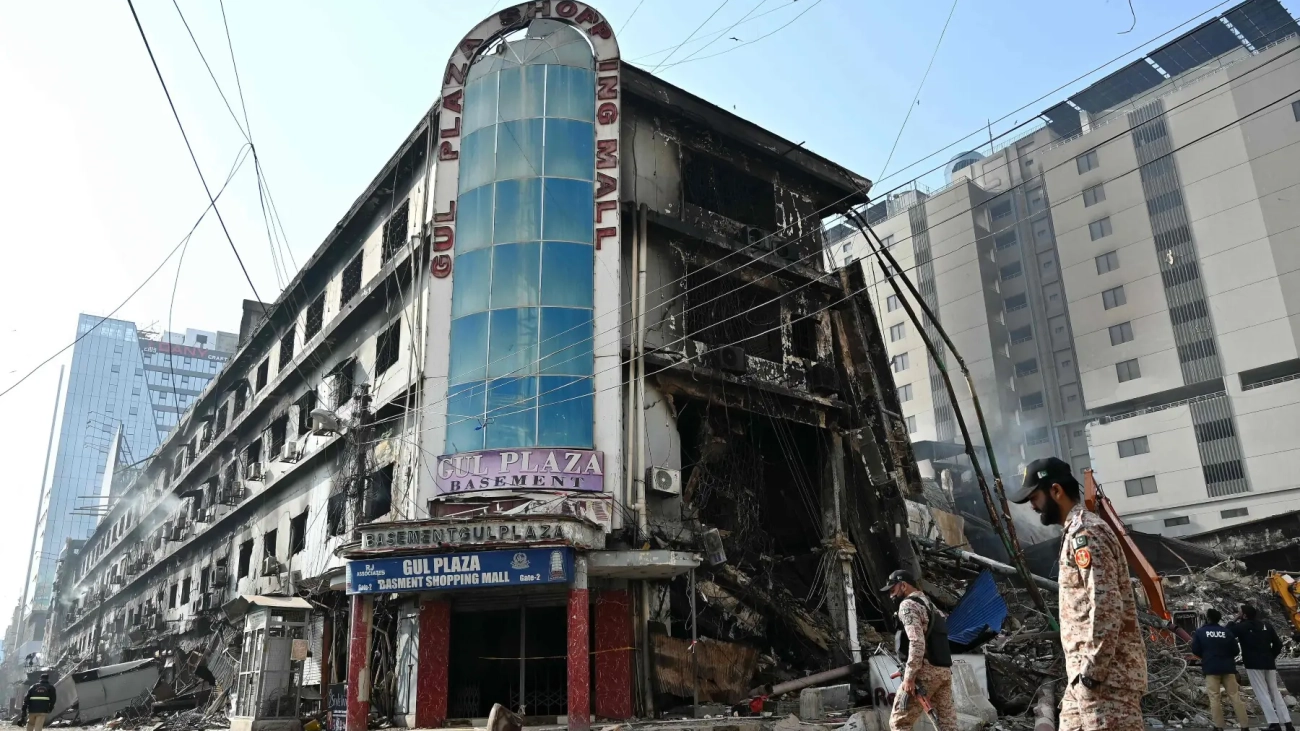
KARACHI: The Sindh Home Department has released the judicial commission’s report into the Gul Plaza fire, concluding that the shopping centre remained in commercial use despite being declared hazardous and violating fire-safety regulations, while its administration failed to rectify known deficiencies.

The commission examined the responsibilities of various parties involved in the tragedy and identified multiple institutional and administrative failures that contributed to the loss of life.

According to the report, Civil Defence inspections conducted in 2024 and 2025 had already identified the absence of essential fire-safety equipment at Gul Plaza. The reports also flagged the presence of combustible materials and deficiencies in emergency exits.

Despite these findings, no effective measures were taken to address the identified shortcomings, the commission observed.

The report said the notification of the fire to the fire brigade was delayed in an “extremely unwise” manner. The subsequent disconnection of electricity plunged the building into darkness, further reducing the chances of people on the upper floors escaping.

Although a speaker system was installed in the building, it was not used during the emergency, the commission found.

The report also highlighted overcrowding and the excessive presence of combustible goods. While the regularised plan of Gul Plaza provided for 1,102 shops, there were actually 1,153 shops operating in the building.

Rescue Response Also Questioned

The judicial commission raised serious questions about the response of the fire brigade and rescue authorities.

It said the fire brigade took longer than its own prescribed response standards to arrive, while effective firefighting operations began approximately 35 to 40 minutes after the incident.

Also Read: “No Fire-Safety Arrangement at PIMS Met International Standards”: Probe Report Submitted to PM Shehbaz

A shortage of water and the need for refilling affected both firefighting and rescue operations. The commission termed the failure to ensure an effective initial water supply, despite claims that water was available at fire stations, a significant administrative question.

The report further stated that emergency personnel arrived after the fire had broken out, but an opportunity for an effective rescue operation still remained.

According to the commission, rescue was possible between 11:00am and 11:20am, when some victims could still be seen. Access to the building through the ramp also remained possible until around 11:30am, but Rescue 1122 failed to turn the available window into a large-scale rescue operation.

The commission concluded that people died not only because of the fire but also because of delays, darkness and blocked exits. It said the failure to use available rescue opportunities in a timely manner contributed to the death toll.

Multiple Institutional Failures Identified

The report said the deficiencies identified in 2024 and 2025 were not followed by effective corrective action. Even after the courts became operational in 2025, legal proceedings were not taken forward effectively.

The commission said Civil Defence’s failure was not due to a lack of awareness of the danger, but rather a failure to ensure implementation of safety requirements.

It also observed that the Sindh Building Control Authority (SBCA) could not escape responsibility merely by maintaining that inspections were conducted on the basis of complaints.

The report identified failures in the building’s safety systems, auditing mechanisms, institutional coordination, firefighting arrangements and emergency response.

It further noted that the law required regular inspection of electrical installations and equipment. However, according to the statement of the Electrical Inspector, no formal electrical inspection of Gul Plaza had been carried out.

The commission concluded that responsibility for the tragedy could not be confined to a single institution or a single government. Various institutions exercising legal, regulatory, building-control, firefighting and emergency-response functions existed during different periods, but the overall system failed to operate effectively.

Fire Claimed More Than 70 Lives

The Gul Plaza fire broke out on January 17, 2026, at the well-known shopping centre on Karachi’s M.A. Jinnah Road.

The blaze continued for three days, killing more than 70 people, while the shopping centre was completely destroyed.

The judicial commission’s findings point to a combination of known safety violations, inadequate enforcement, delayed emergency response and institutional failures as key factors behind the scale of the tragedy.

hina javed

Punjab Prosecution Department Forms Special Committee to Oversee Hina Javed Murder Case

RAWALPINDI: The Punjab Prosecution Department has declared the Hina Javed murder case a high-profile case and constituted a special committee comprising senior prosecutors to oversee the investigation and prosecution proceedings.

The Prosecutor General Punjab has issued necessary directions to the District Public Prosecutor Rawalpindi for effective prosecution of the case and close monitoring of the investigation.

In this regard, an important meeting was held under the supervision of the District Public Prosecutor Rawalpindi with the relevant police officials. The meeting was attended by the Superintendent of Police Potohar, a Deputy Superintendent of Police and the Station House Officer of Civil Lines.

The meeting reviewed in detail the progress made so far in the investigation and prosecution of the woman’s murder case.

Also Read: Police Solve Shamsu Bibi Murder Case, Arrest Five Including Father and Brother

The District Public Prosecutor examined the available case record and received briefings from the relevant officers on the progress of the investigation, evidence collected and various legal aspects of the case.

The participants also discussed measures to ensure that the investigation proceeds strictly on merit and in accordance with the law, as well as issues related to the prosecution of the case.

According to the Prosecution Department, the special committee will continuously monitor both the investigation and court proceedings to ensure that the case is pursued effectively and in accordance with all legal requirements.

The relevant officials have also been directed to keep prosecution authorities regularly updated on developments in the case.

PIMS

Candles Lit Outside PIMS in Memory of 14 Newborns Who Died in Hospital Fire

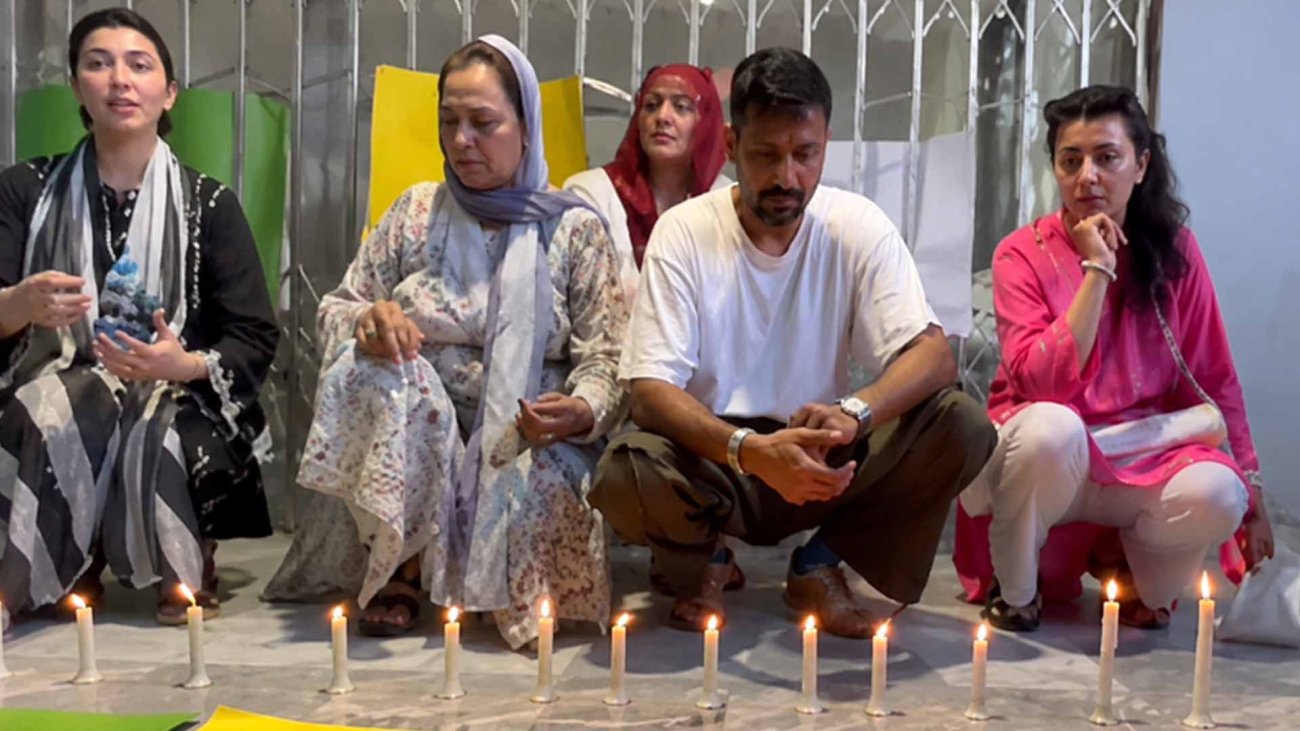
Candles were lit outside the Children’s Hospital at the Pakistan Institute of Medical Sciences (PIMS) in Islamabad in memory of the 14 newborn babies who died in a tragic hospital fire.

Doctors, hospital staff, relatives of patients and members of civil society gathered outside the facility to pay tribute to the infants and express solidarity with their grieving families.

The fire broke out on Wednesday morning in the newborn ward located on the third floor of PIMS’s Mother and Child Health Centre. Hospital authorities said 15 newborn babies were present in the ward at the time of the incident. Only one baby was rescued, while the remaining 14 died.

The atmosphere outside the hospital remained sombre as participants lit candles in memory of the victims. Civil society members held placards, with some calling for a transparent investigation into the incident and strict action against those found responsible.

Grief and anger continue to prevail at PIMS following the tragedy, while the families of the victims are awaiting answers regarding the hospital’s fire-safety arrangements and the response to the emergency.

Also Read: Officer With Controversial History Given Additional Charge of Health Secretary After PIMS Tragedy

Prime Minister Shehbaz Sharif has constituted a high-level inquiry committee headed by former federal secretary Shahid Khan to investigate the deaths. The committee has been tasked with determining the cause of the fire, assessing the hospital’s safety arrangements and identifying those responsible for any negligence.

Initial reports have offered different accounts of the cause of the fire. An initial hospital report attributed the blaze to the explosion of an oxygen-related device in the newborn ward, while an air-conditioning malfunction was also cited as a possible cause in the early reports. The final cause will be determined by the inquiry committee.

The tragedy has also renewed calls for a comprehensive review of fire-safety and emergency response arrangements at hospitals across the country. Families of the deceased infants and civil society representatives are demanding a thorough investigation and accountability for any lapses that contributed to the loss of 14 newborn lives.

Supreme Court of Pakistan

PTI Lawyers Seek Urgent Hearing of Contempt Case at Supreme Court

Pakistan Tehreek-e-Insaf (PTI) lawyers have called for an urgent hearing of a contempt of court case, raising the matter with the registrar of the Supreme Court.

In Islamabad, PTI lawyers Faisal Malik and Naeem Panjutha met with the Supreme Court registrar and requested that the contempt case be scheduled for an early hearing.

The registrar reportedly told the lawyers that a second application could not be accepted on the same grounds on which the first application had been rejected.

The registrar, however, assured the lawyers that the second application would be reviewed if it had been filed on new grounds.

The meeting focused on the PTI legal team’s request for an early hearing, with the registrar’s office indicating that the maintainability of the fresh application would depend on whether it was based on grounds different from those cited in the previously rejected plea.

Also Read: PTI Politicising Imran Khan’s Health Despite Court Order: Atta Tarar

ambulance

Six Die as Passenger Bus Falls into Deep Ravine in Murree

Six people died and several others were injured after a passenger bus fell into a deep ravine in the Lower Barian Lairan Tain area of Murree.

According to rescue officials, more than 20 passengers were travelling on the bus. Rescue teams from Murree were dispatched to the site as soon as the accident was reported, while additional personnel were also called in view of the nature of the incident.

Rescue officials said the seriously injured were shifted to hospitals, while several other injured passengers are receiving treatment at Civil Hospital Murree.

Two girls from the same family also died in the accident, while their mother and brother sustained serious injuries.

According to rescue officials, Civil Hospital Murree was placed on alert in view of the emergency situation.

Also Read: 10 Killed, 13 Injured After Passenger Van Catches Fire on Murree Expressway

Supreme Court of Pakistan

Supreme Court Clears Way for Hearing of PTI Contempt Petition in Imran Khan Case

Significant progress has been made in the case concerning the transfer of Pakistan Tehreek-e-Insaf (PTI) founder Imran Khan to a hospital, with the Supreme Court allowing the party to refile its contempt of court petition after objections raised by the Registrar’s Office were removed.

According to sources, the Registrar’s Office allotted a number to the PTI’s contempt petition after the objections were addressed. The petition has been assigned number 8/2026.

The contempt petition, filed by Imran Khan’s sister Uzma Khan, will now be heard in the Supreme Court under case number 8/2026.

Earlier, the contempt petition was returned by the Supreme Court after Imran Khan was transferred to the Pakistan Institute of Medical Sciences (PIMS) instead of Shifa International Hospital, as directed by the apex court.

The Supreme Court Registrar’s Office had raised objections to the contempt petition filed by PTI and returned it. The party had subsequently announced that it would refile the petition immediately.

PTI Chairman Barrister Gohar Ali Khan, speaking to the media at the Supreme Court Facilitation Centre, said the Registrar’s Office had raised an objection to the petition.

According to Gohar, the objection was that a list of allegations had not been sent to the individuals accused of contempt.

Also Read: Security Situation Made Shifa Hospital Transfer of PTI Founder Impossible, Says Tariq Fazal Chaudhry

He said the party had approached the court seeking an early hearing and that although the contempt petition was being returned, they would refile it the same day.

This is not the first time PTI has filed a contempt petition concerning Imran Khan’s transfer to a hospital. Previously, the Supreme Court Registrar’s Office had also returned a petition after raising objections, following which PTI had filed it again.

On August 18, the Supreme Court ordered that Imran Khan be transferred to Shifa International Hospital in Islamabad for a medical examination. However, the administration transferred him to PIMS instead, citing security concerns. According to the government, doctors from Shifa International were also present during his examination at PIMS.

Following the development, PTI Secretary General Salman Akram Raja and other lawyers filed a contempt petition against Prime Minister Shehbaz Sharif, Law Minister Azam Nazeer Tarar and Information Minister Attaullah Tarar.

Speaking to the media, Salman Akram Raja said the Supreme Court’s order was clear and should have been fully implemented.

Imran-Khan-final-news

Government’s Review Plea Against Imran Khan’s Shifa Transfer Order Gets Case Number

The government’s review petition challenging the Supreme Court’s order regarding the transfer of Pakistan Tehreek-e-Insaf (PTI) founder Imran Khan to Shifa International Hospital has been assigned a case number, paving the way for the matter to be placed before the Supreme Court for hearing.

The process for fixing the review petition for hearing has begun. The date on which the petition will be taken up will be decided by the Chief Justice of Pakistan.

The review petition was filed by the Islamabad Chief Commissioner against the court’s direction concerning Khan’s transfer to Shifa International Hospital. The federal government had also filed a separate application seeking an early hearing of the matter.

Instead of transferring Khan to Shifa International Hospital, the government moved him to the Pakistan Institute of Medical Sciences (PIMS) for a medical examination. Officials said the decision was taken because of security concerns at Shifa, with doctors from the hospital examining Khan at PIMS.

Also Read: PTI Politicising Imran Khan’s Health Despite Court Order: Atta Tarar

Khan’s family and legal team had objected to the decision, maintaining that the Supreme Court’s directions required his transfer to Shifa International Hospital.

Separately, Uzma Khan has filed a contempt of court petition in the Supreme Court against the government over its failure to transfer Imran Khan to Shifa International Hospital.

The Supreme Court will now determine when the government’s review petition is formally taken up for hearing.