
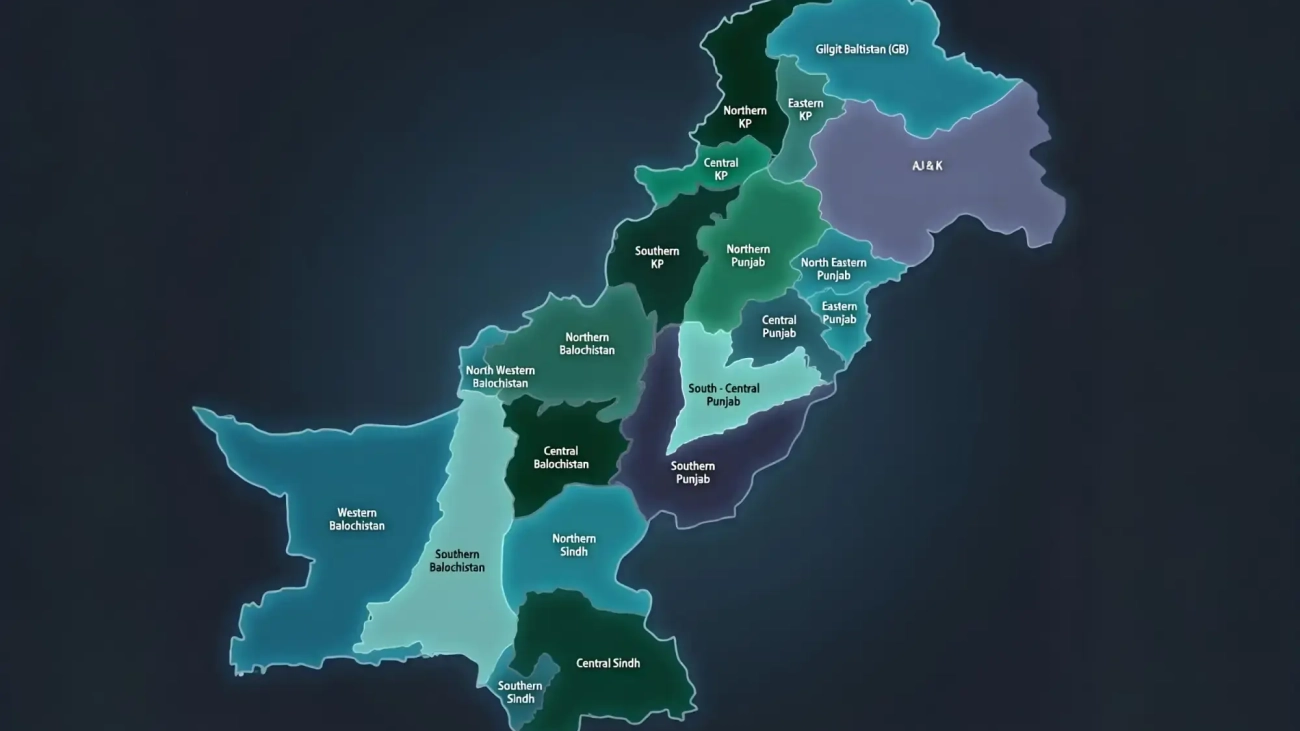
ISLAMABAD: Consultations at the government level on the creation of new provinces have intensified, with the Ministry of Parliamentary Affairs and the Ministry of Law conducting a detailed review of the constitutional and legal aspects of the process.
According to parliamentary sources, the creation of new provinces requires implementation of Article 239 of the Constitution. The sources said that previously passed resolutions by the Khyber Pakhtunkhwa and Punjab assemblies carry no legal significance for the creation of new provinces.
They said that before seeking approval from the relevant provincial assembly, a constitutional amendment must first be passed by a two-thirds majority in both the Senate and the National Assembly. At least four constitutional provisions would need to be amended for the establishment of new provinces.
Parliamentary sources stated that Articles 1, 51, 59, and 106 of the Constitution would require amendments. They added that the number of provinces, as well as the allocation of seats in the Senate, National Assembly, and provincial assemblies, would have to be revised. Seats reserved for women and minorities would also need to be reallocated.
According to the sources, under Article 239, the constitutional amendment bill would first be introduced in either the Senate or the National Assembly.
After securing a two-thirds majority in both houses of Parliament, the bill would be sent to the relevant provincial assembly instead of the President. Under Article 239, the provincial assembly would also have to approve the bill with a two-thirds majority.
The sources said that a new province can only be established after the bill receives two-thirds approval from the Senate, the National Assembly, and the concerned provincial assembly.
Following approval by the provincial assembly, the bill would be sent to the President for assent. Once approved by the President, the process for establishing the new province would formally begin.
However, parliamentary sources said that if the provincial assembly fails to pass the bill with a two-thirds majority, the entire process would become ineffective.
Also Read: Pakistan Issues New 2026 Guidelines for Registration and Accreditation of Foreign Media