
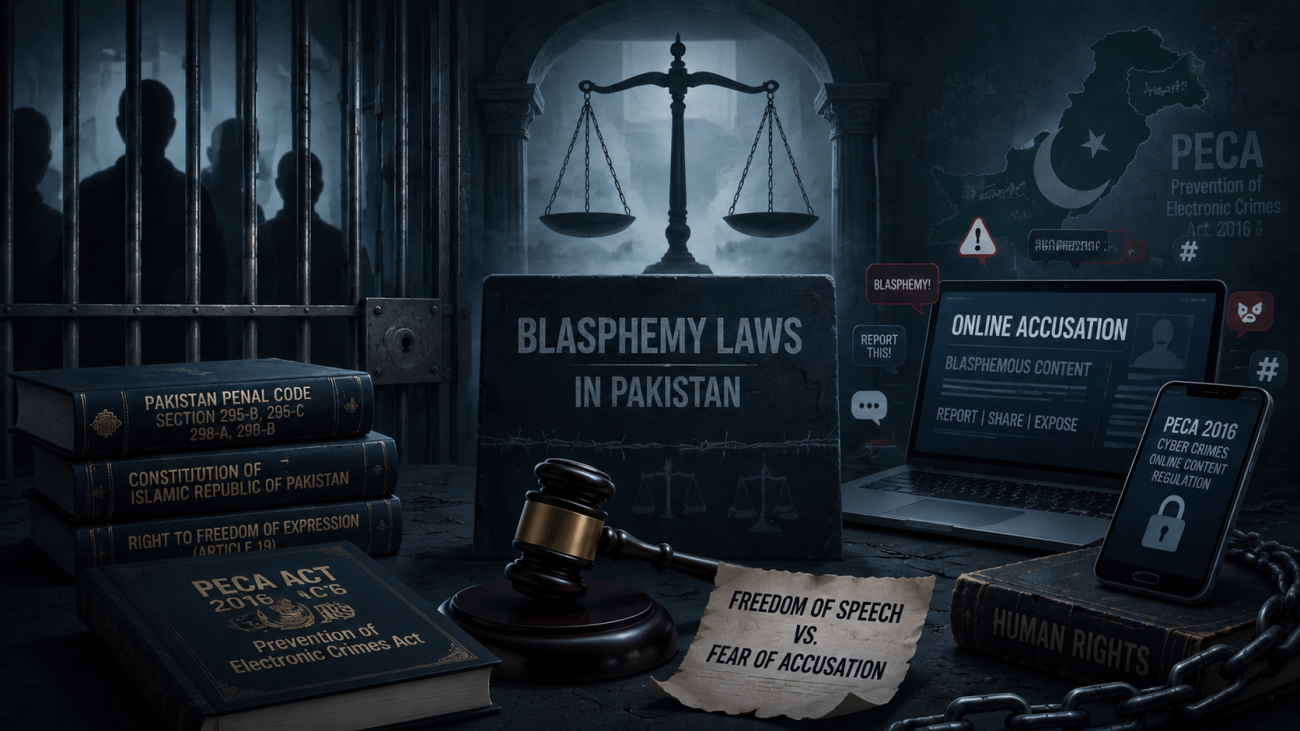
Islamabad: Recent data from the National Commission for Human Rights (NCHR) reveals that 301 individuals are currently imprisoned in Pakistan on allegations of blasphemy, sparking renewed calls from human rights advocates for legislative reforms and stronger protections for the accused.
According to the NCHR tweet, the distribution of accused individuals across major prisons is as follows:
Adiala Jail in Rawalpindi houses 87 prisoners, Lahore has 206, and Karachi has 11.
All arrests were made under Sections 295 A and B of the Pakistan Penal Code (PPC) and the Prevention of Electronic Crimes Act (PECA).
There are a total of 301 persons accused of blasphemy in jails of Pakistan. Adiala Jail 87, Lahore 206 and Karachi 11. All these accused have been arrested u/s 295A & B and PECA Act.
— National Commission for Human Rights (@nchrofficial) June 3, 2026
Legal Framework
Pakistan’s blasphemy laws, contained in Sections 295 A, 295 B, and 295 C of the PPC, criminalize acts deemed offensive to religious sentiment, desecration of the Quran, or derogatory remarks about the Prophet Muhammad (PBUH). The PECA Act further extends prosecution to allegedly blasphemous online content.
Human Rights Concerns
Human rights organisations have consistently raised concerns about misuse and abuse of these laws.
Human Rights Watch (HRW) reports that accusations are often motivated by personal or economic disputes rather than genuine religious offenses. Lawyer Mian Yasir, who has represented several blasphemy defendants, said:
“In my experience, almost all blasphemy accusations in Pakistan are driven by personal motives and mostly by economic reasons. The accusation is a weapon to settle all kinds of scores.”
HRW further noted that authorities frequently fail to protect accused individuals from vigilante violence, and prosecutions for attacks against them remain rare.
Human Rights Commission of Pakistan (HRCP), a leading civil liberties organisation founded by activists including Asma Jahangir and I.A. Rehman, has warned that vague legislative language and lack of safeguards lead to harassment, persecution, and discrimination against vulnerable groups. HRCP Chairperson Hina Jilani stated in 2023:
“…such amendments risk exacerbating persecution and would likely be weaponised disproportionately against religious minorities and sects, resulting in false FIRs, harassment and persecution.”
HRCP also cautioned that increasing penalties without proper legal protections violates constitutional guarantees of liberty and fair trial rights.
Historical Context and Major Cases
- Asia Bibi Case (2009–2018): Christian woman Asia Bibi was sentenced to death under Section 295 C, later acquitted by the Supreme Court.
- Shafqat Emmanuel & Shagufta Kausar (2013–2021): A Christian couple sentenced to death for allegedly sending blasphemous SMS messages; death sentences overturned due to procedural flaws and lack of evidence.
- Tahir Ahmed Naseem (2020): A US-born Pakistani accused of blasphemy was killed in a Peshawar courtroom by a mob, highlighting failures in protective custody.
- Engineer Muhammad Ali Mirza (2025–2026): FIR filed for online content under Section 295 C and PECA; granted bail after months in custody, illustrating ongoing concerns over online speech prosecutions.
Calls for Reform
Human rights advocates continue urging Pakistani authorities to:
- Strengthen procedural safeguards to prevent misuse of blasphemy provisions,
- Ensure timely and fair trials without prejudice,
- Protect accused individuals from vigilante attacks, and
Human Rights Activists stress that, even when courts acquit accused individuals, social stigma and threats often persist. Lawyers defending the accused also face intimidation, underscoring the deep societal entanglement of these laws.